How Online Learning Improves Employee Productivity and Confidence?

Let’s start with a simple question.
As a business owner or leader, have you ever felt that your team has the potential – but something is holding them back?
Most of the time, it’s not a lack of effort.
It’s a lack of clarity, confidence, and continuous learning.
This is exactly where online learning quietly steps in and makes a big difference.
Online learning is no longer “nice to have” – it’s a business advantage
Gone are the days when learning meant:
· long classroom sessions
· fixed schedules
· lost work hours
For businesses, this means:
· employees learn without disrupting productivity
· skills are applied immediately on the job
· confidence builds naturally over time
How online learning boosts employee productivity
1. Online Learning Happens at Their Own Pace
With online training programs, employees can:
· pause
· revisit
· relearn
This reduces mistakes and improves accuracy at work.
2. Faster Skill Development
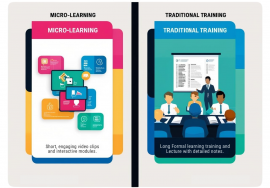
Short modules, videos, and microlearning help employees:
· learn faster
· implement quicker
· perform better
This directly impacts work efficiency and output.
3. Less Downtime, More Focus
Since online learning doesn’t pull employees away from work for long hours, productivity stays intact while learning continues.
The confidence factor: Why it matters more than you think
Confidence is often the hidden driver of performance.
Employees who are confident:
· communicate better
· take ownership
· make decisions faster
· handle customers more effectively
Online learning supports this by:
· giving employees knowledge on demand
· reducing fear of “getting it wrong”
· offering a safe space to learn and practice
Over time, this builds workplace confidence, not just skills.
Why business owners are choosing online learning
From fast-growing startups to established global enterprises, business leaders are increasingly turning to digital learning solutions because they offer scalable, measurable, and cost-effective ways to build capability across the organization. Online learning makes it easier to standardize training across departments and locations, track employee progress with clarity, and identify skill gaps before they impact performance.
More than just a training tool, it becomes a strategic investment supporting structured growth, improving operational consistency, and strengthening long-term workforce development in a sustainable way.
Online learning isn’t just about courses – It’s about culture
When businesses invest in employee upskilling, something interesting happens.
Employees feel:
· valued
· supported
· motivated to grow
This creates a learning culture, where improvement becomes continuous – not occasional.
At WEBA Immersive Learning, we often see organizations realize that training isn’t just about content. It’s about empowering people to perform with confidence.
A gentle thought for business leaders
If your employees hesitate to:
· take initiative
· speak up
· adopt new tools
It may not be resistance. It may simply be a lack of structured learning.
Online learning bridges that gap – quietly, consistently, and effectively.
Frequently asked questions (Q&A)
Q1. What is online learning in a business context?
Online learning refers to digital training programs that help employees build skills through videos, modules, simulations, and interactive content – anytime, anywhere.
Q2. How does online learning improve employee productivity?
It allows employees to learn at their own pace, reduce errors, apply skills faster, and avoid long training downtimes – leading to better performance.
Q3. Can online learning really build employee confidence?
Yes. When employees understand their roles clearly and have access to learning resources, they feel more confident in decision-making and execution.
Q4. Is online learning suitable for small businesses?
Absolutely. Online learning is flexible and scalable, making it ideal for both small teams and large organizations.
Q5. How can businesses measure the impact of online learning?
Through learning progress, performance improvements, reduced errors, faster onboarding, and overall productivity metrics.